.webp)







Subnautica is widely praised for its alien ocean setting, immersive survival mechanics, and environmental storytelling. Developed by Unknown Worlds Entertainment, the game places players on the aquatic planet 4546B after a catastrophic spacecraft crash. With almost no guidance and minimal resources, players must survive by exploring increasingly dangerous underwater biomes.
At first glance, Subnautica appears to be a survival crafting game centered around base building, resource gathering, and exploration. Yet beneath those systems lies a more psychologically influential mechanic: oxygen limitation. Every expedition, no matter how small, is shaped by the constant awareness that breathable air is finite.
This article examines one specific issue in Subnautica: how oxygen management evolves from a survival mechanic into the game’s primary psychological pressure system, fundamentally controlling pacing, exploration behavior, and player fear. Over time, oxygen stops being a simple resource and becomes the invisible force shaping every decision beneath the ocean surface.
1. The First Dive: Oxygen as a Tutorial Mechanic
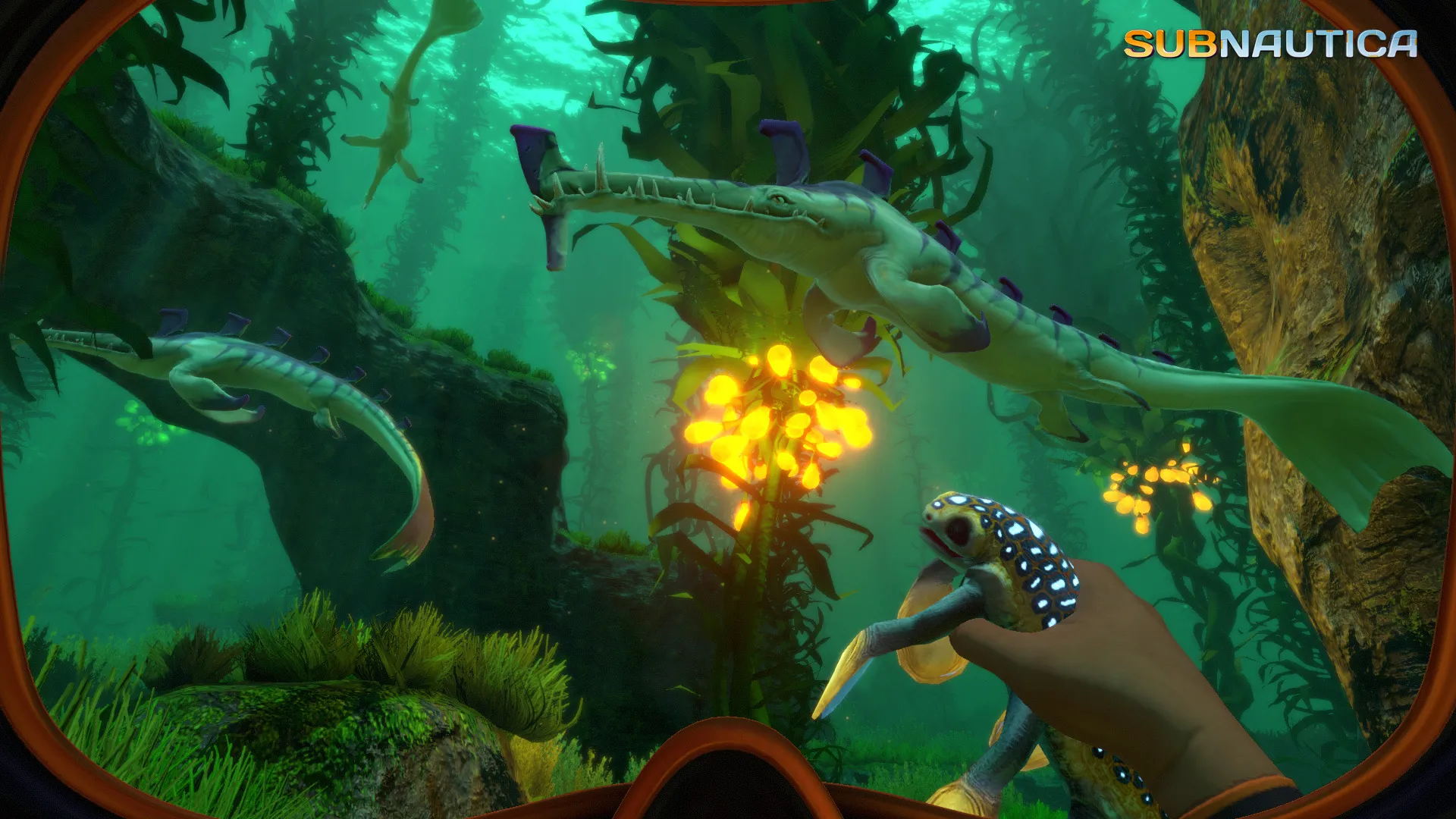
In the opening minutes of Subnautica, oxygen functions as a basic survival requirement. Players swim through shallow coral reefs collecting materials while occasionally returning to the surface for air.
H3: Early Simplicity
The Safe Shallows biome is intentionally forgiving:
- Bright lighting reduces fear
- Surface access is immediate
- Oxygen depletion is slow
H4: Learning Spatial Awareness
Players quickly learn:
- How far they can travel
- How long they can remain underwater
- How terrain affects return routes
At this stage, oxygen feels manageable.
2. The Transition From Resource to Threat
The moment players descend deeper, oxygen changes psychologically.
H3: Depth Changes Perception
Deeper biomes introduce:
- Reduced visibility
- Complex cave systems
- Longer ascent times
H4: The Emergence of Anxiety
Players begin calculating:
- Remaining oxygen seconds
- Distance from safety
- Potential navigation errors
Oxygen transforms from a resource into a countdown.
3. Cave Systems and Spatial Panic
Caves represent one of Subnautica’s most stressful environments because they disrupt directional certainty.
H3: Confined Navigation
Inside cave systems:
- Escape routes become unclear
- Vertical orientation is difficult
- Light sources diminish rapidly
H4: Oxygen-Induced Panic
When oxygen becomes critically low:
- Players abandon resource collection
- Navigation precision collapses
- Panic movement increases mistakes
Fear emerges not from enemies, but from disorientation.
4. Vehicles as Temporary Psychological Relief
Vehicles such as the Seamoth initially appear to solve oxygen problems.
H3: The Illusion of Security
Vehicles provide:
- Mobile oxygen supply
- Faster movement
- Protection from small predators
H4: Expanded Risk Radius
However, vehicles also encourage:
- Deeper exploration
- Longer expeditions
- Greater distance from safety
The sense of security increases exposure to danger.
5. Oxygen and Predator Design
Subnautica’s creatures are terrifying partly because oxygen reduces player flexibility during encounters.
H3: Restricted Escape Options
When attacked underwater, players cannot:
- Fight indefinitely
- Hide for long periods
- Wait safely underwater
H4: Pressure Amplification
Every encounter includes two simultaneous threats:
- The creature itself
- Oxygen depletion
This dual pressure intensifies fear dramatically.
6. The Deep Biomes and Psychological Compression
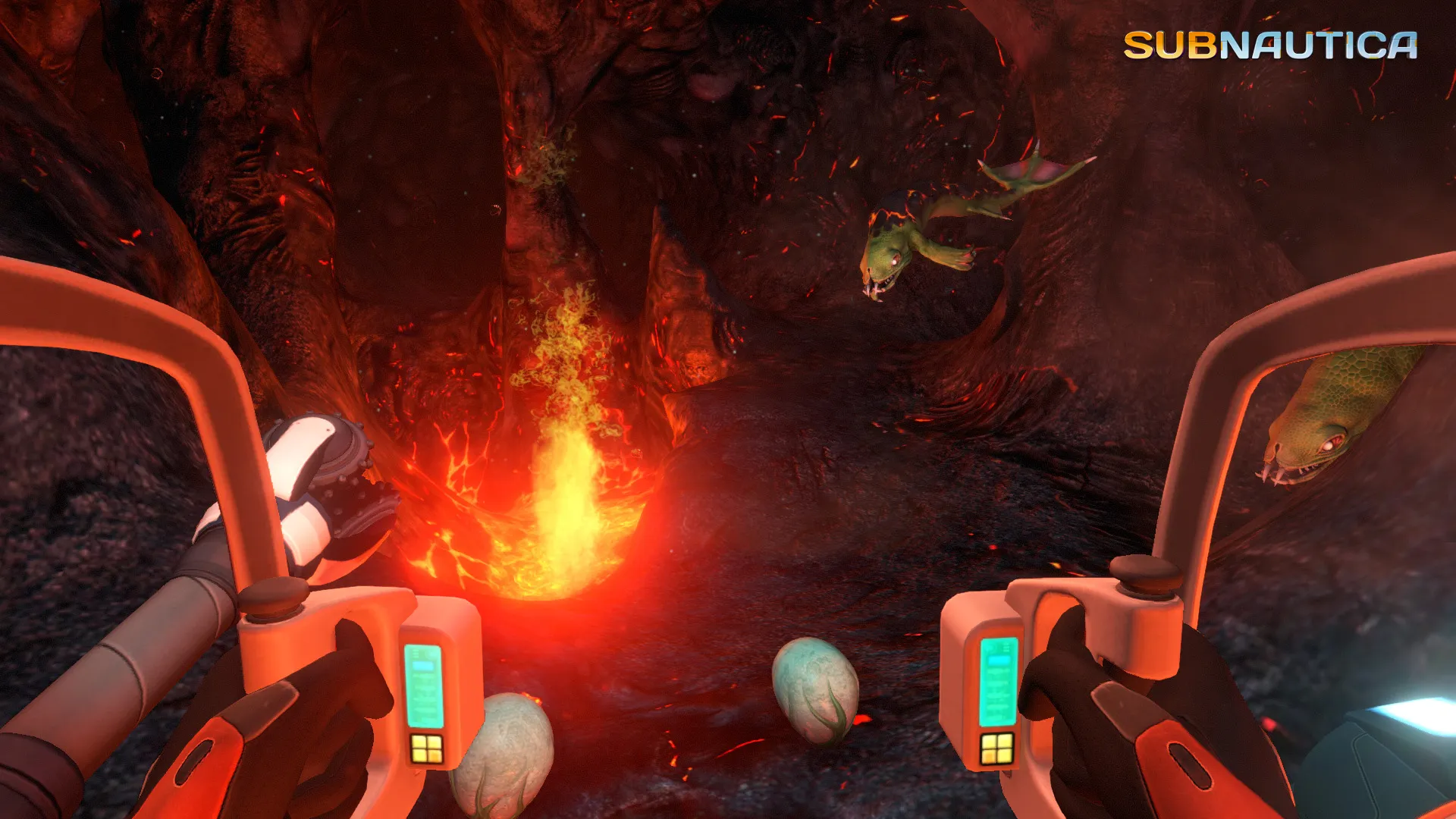
As players reach zones like the Lost River or Lava Lakes, oxygen systems become increasingly complex.
H3: Environmental Hostility
Late-game areas introduce:
- Extreme depth
- Dangerous fauna
- Limited escape routes
H4: Mental Compression
Players must track:
- Vehicle power
- Oxygen reserves
- Route memorization
- Predator positions
The deeper the biome, the narrower the margin for error.
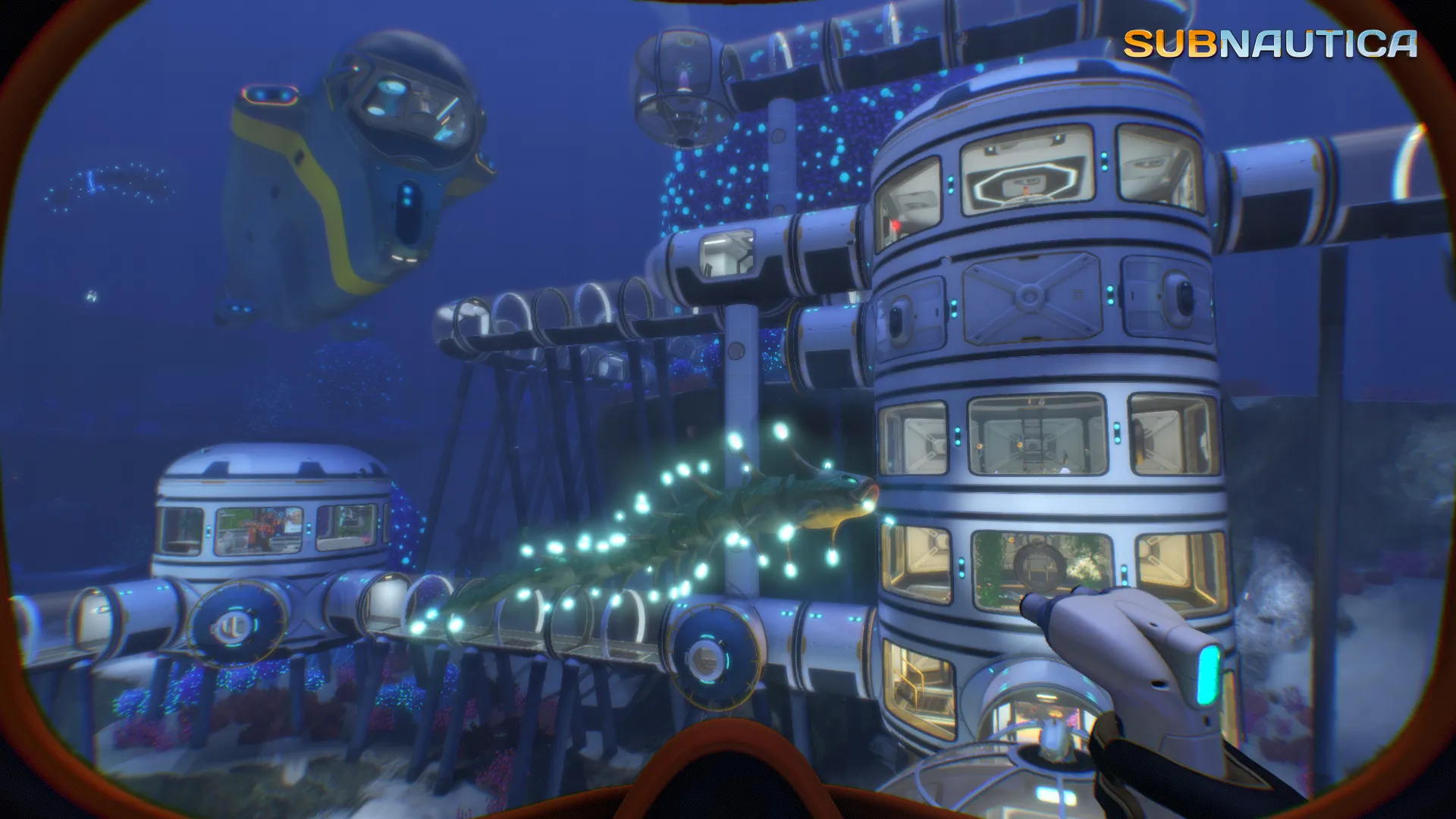
7. Base Building as Oxygen Infrastructure
Players eventually realize that bases are not merely cosmetic.
H3: Strategic Safe Zones
Bases function as:
- Oxygen checkpoints
- Navigation anchors
- Psychological recovery spaces
H4: Expansion Through Breathing Space
Each new base extends exploration capability by reducing oxygen pressure.
The map becomes survivable only through infrastructure.
8. Sound Design and Oxygen Fear
Subnautica’s audio design strengthens oxygen anxiety significantly.
H3: Acoustic Reinforcement
Players hear:
- Breathing intensify
- Oxygen warnings repeat
- Environmental silence deepen at lower depths
H4: Countdown Psychology
The automated warning:
“30 seconds of oxygen remaining”
acts as a direct stress trigger.
The sound itself becomes frightening.
9. Late-Game Adaptation and Lingering Fear
Even after unlocking advanced technology, oxygen anxiety never disappears completely.
H3: Mastery Without Comfort
Experienced players gain:
- Larger oxygen tanks
- Better vehicles
- Faster mobility
H4: Persistent Vulnerability
Yet fear remains because:
- Navigation mistakes still happen
- Vehicle failures occur
- Unexpected encounters disrupt plans
The ocean never feels fully conquered.
10. The Core Design Conflict
Subnautica’s oxygen system succeeds because it creates vulnerability. However, it also imposes structural limits on player freedom.
H3: Strengths of Oxygen Pressure
The mechanic:
- Enhances immersion
- Creates natural pacing
- Generates authentic fear
H4: Structural Downsides
However, it can also:
- Discourage experimentation
- Punish exploration mistakes harshly
- Cause repetitive return trips
List – Potential Alternative Systems
- More temporary oxygen pockets
- Dynamic emergency tools
- Reduced early-game oxygen rigidity
- Greater navigation assistance in caves
Balancing tension and exploration freedom remains difficult.
Conclusion
Subnautica’s greatest achievement is not its crafting system, its creatures, or even its world design. It is the way the game transforms oxygen into a psychological weapon.
At first, oxygen appears to be a simple survival meter. Over time, however, it shapes every aspect of the experience: exploration pacing, fear response, spatial awareness, and player behavior. The deeper players travel, the more oxygen governs emotion itself.
By tying survival directly to breathing, Subnautica creates a uniquely intimate form of tension. Players are not merely managing a resource—they are constantly negotiating with panic, distance, and vulnerability beneath an endless ocean.
The result is a survival game where the greatest enemy is often not the creatures lurking in the dark, but the terrifying awareness that every second underwater is borrowed time.