.webp)






Cyberpunk 2077 is more than a neon-drenched action RPG. At its core lies a powerful story about identity, mortality, and the struggle against systems too large for anyone to truly overcome. After the 2.0 overhaul and Phantom Liberty, the narrative now feels complete, with new endings that reshape the emotional direction of the entire game.
This feature takes a deep look at Cyberpunk 2077’s storytelling structure, its characters, the thematic backbone behind the narrative, and how the final 2025 version unifies V’s journey into a coherent, tragic, and unforgettable arc.
The Heart of Cyberpunk 2077: A Story About a Stolen Future
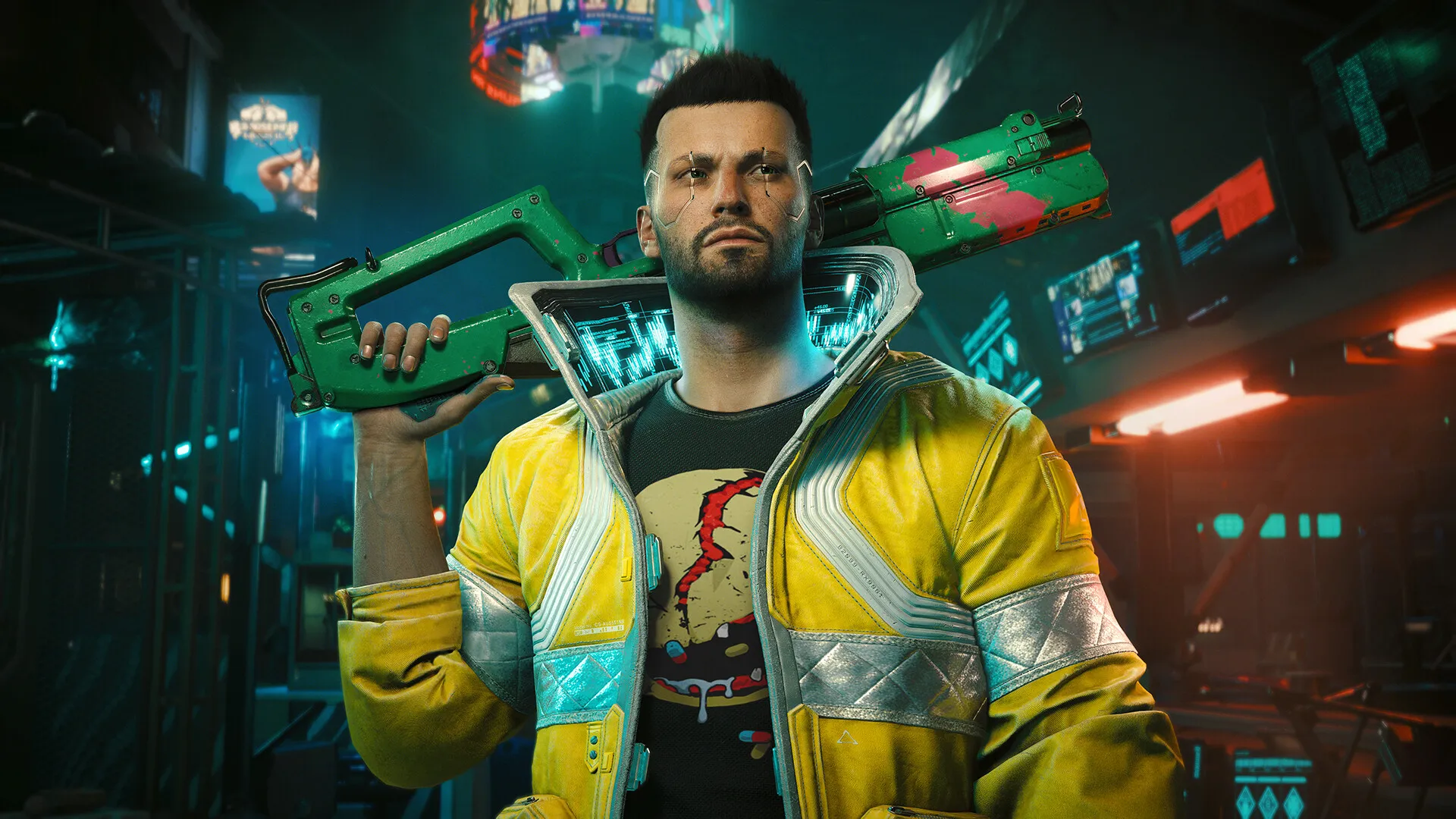
Cyberpunk 2077 is not the story of a rising hero. It is the story of a person running out of time. V’s conflict with the Relic—the experimental chip containing Johnny Silverhand’s engram—is the narrative engine driving every choice, relationship, and emotional turning point.
The Relic as a Narrative Device
The Relic slowly erasing V is the game’s most effective storytelling mechanism. It sets a strict countdown, turns Johnny into both antagonist and companion, and frames every major decision around the question of survival and meaning.
V’s Journey is a Descent
Unlike classic RPGs where characters grow stronger and more influential, V grows more desperate. The more capable V becomes in gameplay, the closer they move toward their inevitable ending. This tension defines the entire tone of the story.

Johnny Silverhand: Ghost, Terrorist, Mirror
A Character Built on Contradiction
Johnny Silverhand begins as the enemy inside V’s head: invasive, aggressive, manipulative. But as the story progresses, he becomes the only person who truly understands V’s situation.
Johnny as V’s Dark Reflection
Johnny is everything V fears becoming:
• forgotten by the world
• consumed by ideals that cost too much
• erased, overwritten, and redefined by forces he cannot fight
Their Relationship Shapes the Ending
How V treats Johnny is as meaningful as any dialogue choice. Friendship, hostility, reluctant respect, or bitter acceptance steer the tone of the game and the fate of both characters.
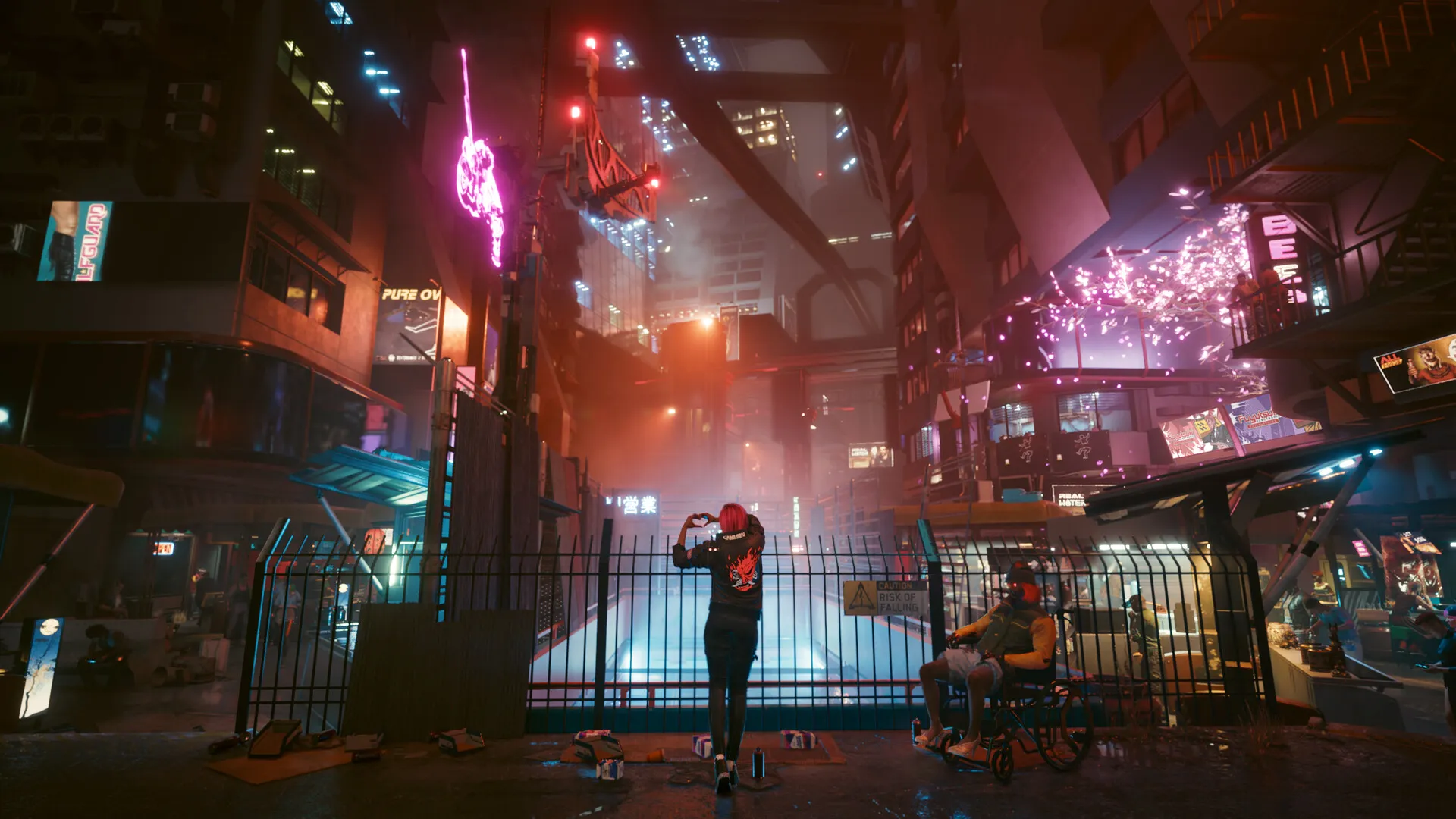
Night City as a Living Antagonist
Night City is not merely a backdrop; it is the game’s true villain. It devours dreams, exploits ambition, and rewards survival over morality.
Why Night City Feels Alive
The city obeys its own brutal logic:
• corpos thrive and survive
• fixers profit from perpetual conflict
• mercs like V burn out quickly
Thematically Aligned Architecture
Every district visually communicates its social hierarchy. The rich rise above the pollution, the workers live in decay, and the abandoned are pushed to the edges. The environment reinforces the story’s themes without a single line of dialogue.
Major Story Arcs and Their Themes
The Heist: Birth of a Doomed Protagonist
The Heist mission is the narrative’s point of no return. V’s dream of a better life shatters instantly.
Key Themes
• Chance vs consequence
• Human fragility
• The illusion of control
Everything goes wrong because in Night City, even well-planned dreams collapse under pressure.
Judy Alvarez and the Search for Meaning
Judy’s arc focuses on trauma, community, and the possibility of change.
Why Judy Matters
Judy shows a path outside of the mercenary cycle: building connections, healing, and supporting others. She represents the emotional life V might have had without the Relic.
A Counterpoint to Night City
Judy refuses to surrender to the city’s cruelty. Her story introduces the rare theme of hope, which becomes crucial when players reach the game’s final choices.
Panam Palmer and the Outsider’s Path
Panam symbolizes resistance—not rebellion for ideology like Johnny, but rebellion for personal belonging.
Panam’s Arc Themes
• found family
• mutual trust
• the possibility of escape
Panam represents a literal and metaphorical road out of Night City, turning her storyline into one of the most emotionally grounded arcs.
River Ward and the Cost of Goodness
River’s storyline centers on justice in a system designed to fail.
Key Themes
• institutional decay
• moral duty vs systemic corruption
River illustrates how goodness struggles to survive in Night City. His dedication to truth contrasts with the city's apathy, giving his arc significant narrative weight.
Kerry Eurodyne and the Fear of Obsolescence
Kerry’s arc mirrors V’s fear: becoming obsolete in a world that moves too fast.
Kerry’s Key Themes
• aging in a hyper-accelerated society
• identity beyond fame
• reconciliation with one’s past
His story acts as a quieter reflection of V and Johnny’s conflict over legacy.
The Major Factions and What They Represent
Arasaka: The Machine of Immortality
Arasaka symbolizes control, memory ownership, and corporate supremacy.
Narrative Function
Arasaka’s experiments with consciousness blur the line between humanity and product, turning souls into intellectual property. This is the root of V’s tragedy.
Militech and the Illusion of Patriotism
Militech’s presence reveals the hollowness of national identity in a world where corporations hold power.
Theme
Militech shows that ideological loyalty is meaningless when profit determines morality.
The Aldecaldos as a Rejection of the City
The Aldecaldos represent connection, cooperation, and freedom. They reject Night City’s hierarchy and instead build a community based on mutual support.
Significance
They embody the only sustainable model of life in the Cyberpunk world, offering V a believable chance at survival.
The Endings: Interpreting V’s Fate
Each ending answers the same question: How does V choose to live knowing they will die?
The Arasaka Ending: Acceptance of the Inevitable
V joins Arasaka’s program to extract and save their consciousness. It is the most explicit tragedy.
Themes
• surrender to corporate power
• fear overcoming idealism
• humanity reduced to data
The epilogue’s emptiness reinforces the ending’s emotional weight.
The Aldecaldo Ending: A Fragile Hope
V leaves Night City with the Aldecaldos, holding onto hope despite their limited future.
Themes
• found family
• survival over ambition
• choosing meaning over glory
It is the most emotionally fulfilling ending, but still bittersweet because V’s time is finite.
Johnny’s Ending: Becoming a Legend by Leaving the Body Behind
V gives up their body to Johnny.
Themes
• sacrifice
• legacy
• the definition of identity
V becomes a ghost of Night City’s future, while Johnny tries to live a quieter life. It is the ending of philosophical acceptance rather than victory.
The Secret Solo Ending: Pride Over Survival
V infiltrates Arasaka Tower alone.
Themes
• individuality
• refusal to rely on others
• tragic heroism
It is the purest expression of V’s mercenary identity, ending in personal glory or utter annihilation.
Phantom Liberty Ending: The Most Devastating Canon Path
The 2025 Phantom Liberty ending is widely regarded as the most emotionally powerful.
Why This Ending Matters
V survives, but loses everything that defined them: their abilities, cyberware compatibility, and mercenary life. It is not the triumphant survival one hopes for, but the most realistic in the harsh world the game portrays.
Themes
• survival with consequence
• identity without power
• the cruel logic of Night City
V lives, but the legend dies.
Why Cyberpunk 2077’s Story Endures in 2025
Even years after release, the narrative continues to resonate because it tells a universal truth: people fight for meaning even when the struggle feels hopeless.
Human Themes Beneath the Neon
• identity
• mortality
• ambition
• regret
• legacy
Cyberpunk 2077 thrives not because of its futuristic setting but because its emotional conflicts are timeless.
Conclusion
Cyberpunk 2077 in 2025 is a complete narrative masterpiece. The story is a tragic exploration of humanity under pressure, framed by a world that values power over life. V’s journey is defined not by victory, but by how they decide to face inevitable loss. Each arc, relationship, and ending reinforces the game’s central message: that meaning is found in choice, not outcome.
Night City devours nearly everyone who enters it, yet within that darkness exist brief moments of connection, rebellion, and hope. Cyberpunk 2077 tells the story of a dying mercenary who tries to define those moments before the end—and that is why its narrative remains powerful, unforgettable, and deeply human.