 free9game.com
Between Two Pairs of Hands: How Carry the Glass Turns a Window Into Shared Control
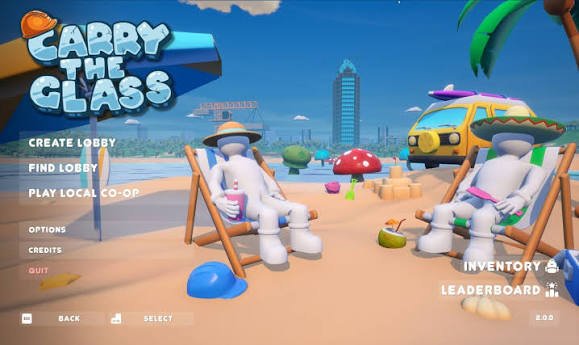
Two construction workers arrive at a corner with a window between them. From the front, the turn looks nearly finished. One worker can already see the way forward. At the other end, the second worker is still coming around, and a corner of the window has yet to clear the wall. This imagined moment captures a recurring tension in Carry the Glass. Both players can be paying attention, both can understand the destination, and both can make reasonable decisions that produce a terrible result together. The game follows a pair of workers delivering a fragile pane through obstacle courses. Its most interesting design choice is what happens between their hands. The pane gives two people control over different parts of one movement, then makes the quality of that movement visible to both. Across the city, harbor, and vertical climb of the Skyscraper course, that arrangement changes what it means to go first, to wait, to recover from a mistake, and finally to arrive.
1. Picking Up a Job With Two Centers of Control
The distance between the handles
The construction job makes the premise easy to picture. A window belongs at a particular destination, and its shape and fragility determine what counts as a successful delivery. The workers hold the glass by its handles, with the official description emphasizing that their hands stay on through jumps and rolls even as their bodies wobble. That continuity is important. A jump can change a worker's relation to the floor without ending their relation to the other person. Each player's movement remains part of a larger configuration. To understand what is happening on screen, the eye can follow a pair of feet and then travel along the pane to the other pair. The game puts the unit of play in that distance. One person may move first or make a more dramatic correction, but the movement is still unfinished until the second end has traveled with them. A doorway, viewed this way, has to admit two bodies and the piece of glass that connects them, which may occupy space the bodies themselves never touch.
Imagine the same two workers carrying separate packages through the same street. A worker who sees an opening can take it, and a slower partner can wait for the next one. Their coordination concerns where they meet after crossing. With a single window, the workers have to coordinate before and during the crossing, because the second person's position helps determine what the first person's choice does to the pane. This difference gives the game something more specific than a common destination. It makes an ordinary input, such as a few steps forward, dependent on what another person is doing at the moment. Early movement can feel surprisingly intimate for that reason. The players are learning how quickly the other responds, how much room they think they have, and when they treat an opening as an invitation to move. The first part of the job establishes the partnership through a series of small physical negotiations before the level asks it to survive anything spectacular.
2. On the City Streets, the Rear End Tells a Different Story
Where a turn actually finishes
The Skyscraper course begins in the city and proceeds through the harbor before the building climb. The street portion is a useful place to think about the space the glass takes up between the carriers. Consider a bend where the person at the front starts to round a corner while the other is still approaching it. The front player's route can be perfectly clear while the window's middle passes close to the inside edge. The rear player, meanwhile, may still be looking along the original line of travel. Each person has a different answer to the question of where the pair is. One answer comes from the leading body, the other from the trailing body, and neither alone describes the shape they are moving. The pane gives the turn a duration. Its orientation keeps changing after the leading worker has already found the new direction, and the movement is only complete once its rear edge has followed. This makes a familiar street corner do the work of a puzzle without needing a separate riddle or a concealed solution.
The front and back positions also carry different kinds of attention. From ahead, a player has a reason to look at the next stretch of road. That is where traffic, a change in direction, or the next patch of usable space will matter. From behind, a player may be watching the part of the current turn their partner is ready to forget. The arrangement gives the trailing worker information worth interrupting for. A quick warning from the rear can sound like disagreement with the route even when both people want exactly the same thing. The disagreement is over which phase of the turn they are in. This is an especially persuasive use of the window because it makes that disagreement legible after the fact. When the pair sees where the glass was in relation to the corner, a vague sense that someone moved badly can resolve into a more precise account of who had cleared which part of the space. The level gives two different perspectives equal practical value.
3. At the Harbor, Waiting Becomes Part of the Crossing
One opening for the entire pane
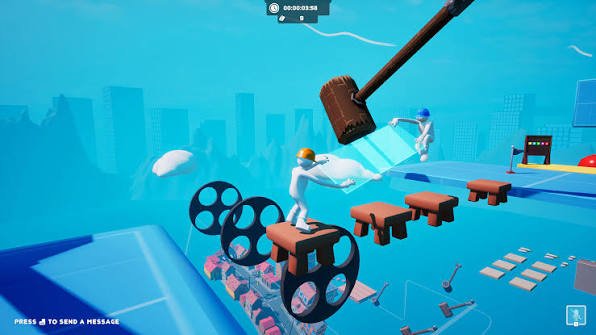
The harbor pier sits between the city streets and the climb in the official description of Skyscraper. As a change of setting, it makes the idea of a crossing more pronounced. A route can narrow, and the sense of space beyond its edge can make progress feel less reversible. Think of any timed opening on a shared route. If the front carrier sees enough room to step in, that observation says something about the beginning of the crossing. The group still has to account for how long it will take the window and the second worker to come through. The time the hazard allows and the time the pair needs are different quantities. Even a wide opening can be brief, and a moment that looks generous to the leading player can feel vanishingly small from the rear. A regular platforming decision about when to leave a safe patch becomes a prediction about how long two people will remain committed to a single move.
Waiting takes on a particular social meaning under those conditions. From the front, a pause can feel like an opportunity slipping away. From behind, the same pause can be time needed to get into a position from which the whole crossing is possible. There is a difference between sharing a count and sharing an understanding of what the count starts. One player might hear the cue as permission to advance immediately. The other might understand it as the moment to finish lining up. A conversation can be perfectly clear at the level of words and still leave a gap at the level of action. The pane exposes the gap because the discrepancy can appear as a change in angle before either worker has moved very far. This is where restraint begins to look like a form of play in its own right. A pair that holds together while an opening passes has made a joint decision under pressure. The quietness of the scene can disguise how much they have just managed to agree on.
4. The First Floors Make the Window's Angle Matter
Climbing with the pane between elevations
Once the Skyscraper route heads upward, the relationship between the carriers gains a vertical dimension. The store description presents the ascent as a floor-by-floor climb. In a representative transition between surfaces of different heights, one worker can reach the higher footing while the other is still below. The pane then makes the difference in elevation apparent, and the upper worker's feeling of having arrived can be premature. What happens during that brief stagger matters as much as where the two people intend to stand afterward. There is a practical difference between a stable end position and the sequence of positions required to reach it. A clear spot on the higher floor settles where the leading worker can go. The shape of the window during the transition raises a separate question about what space it will occupy before both workers are there. Giving the carry a vertical component makes that distinction easy to see, especially when one carrier is already looking ahead across the next floor.
The climb changes the emotional texture of the rear position, too. On an open street, following a little later can look casual. With a difference in height, it can feel as if one person's hold on progress is more secure than the other's. The worker who has found a foothold may be eager to keep moving. The worker who is still making the transition can experience that eagerness as another complication. Yet being first to settle also gives the leading player the chance to supply something useful to the pair: a comparatively predictable end of the pane. The design makes it possible to contribute by keeping a position long enough for someone else to finish theirs. That contribution is difficult to celebrate in a screenshot, since the player doing it may be standing nearly still. It becomes obvious in motion, when the window passes through the awkward middle of a climb and the brief difference in height resolves into two people on the same floor.
5. Swinging Hammers Put the Players on Separate Clocks
Passing a hazard in stages
What one opening can contain
Swinging hammers are among the hazards named in the Skyscraper course description. A swinging obstacle gives players an opportunity to watch a motion repeat and anticipate when space will open. The shared carry complicates that reading because different parts of the pair can reach the dangerous area at different moments. In a crossing where one end leads, the first worker may already be moving away from the hammer while the pane is still passing through its path. The rear worker can remain exposed even after the first player feels the tension release. In other orientations the stages may overlap, and how much they overlap depends on the direction and angle of the carry. The design makes a periodic hazard more interesting by placing an object with a long edge inside the cycle. The players need to form an expectation about several moments of the crossing, including the one they will be least comfortable watching once they are already moving.
- Entry. One end commits to the space swept by the obstacle.
- Transit. The pane occupies part of that space as the workers' positions change.
- Exit. The trailing end clears, completing the crossing for the pair.
Those phases help explain why an early celebration can be so funny. A player reacts to the completion of the phase they can feel most clearly. Their partner is still in the middle of the phase that matters to them. The hammer keeps swinging while the two people briefly inhabit different versions of the event. In conversation, a success cue can therefore arrive before the success itself and even encourage an ill-timed change in pace. There is an equally satisfying opposite moment when the leading carrier keeps moving at a steady rate after getting clear, leaving the rear carrier an intelligible crossing. Its quality is easy to miss on a successful attempt. It often takes the memory of a messier run for the pair to recognize how much they owe to a motion that continued at the same speed for another second.
6. Spinning Floors Turn the Ground Into Another Moving Part
Keeping a shared reference point
The developer's course description also names spinning floors and rolling red balls. Both supply motion outside the players' immediate control, though they complicate different parts of the carry. A rolling ball moves through space the pair may want to occupy. A spinning floor makes the supporting surface itself part of the problem. Consider the moment when the window spans a transition between a moving area and a steadier one. The workers may judge the route using different reference points. One is looking at the fixed architecture that marks where the pair wants to go. The other is occupied with the moving surface immediately underfoot. A word as ordinary as “straight” becomes less useful when one person means along the route and the other means along the angle they currently face. The glass retains a visible orientation across both frames. The pair can see the consequences of those two readings in the same object, even while their reasons for moving remain distinct.
External motion makes it difficult to identify the author of a correction. When the pane begins to turn, a worker could be responding to the surface, responding to their partner, or initiating a different route entirely. The other worker might see that turn and add a correction of their own, producing a larger change than either intended. By the time both notice what has happened, the original reason for moving may have disappeared. There is an interesting kind of suspense in that short chain of responses. The players are waiting to discover whether their movements complement one another while the obstacle continues doing its own thing. A successful passage can feel surprisingly composed even if both players recall making several hurried decisions. The coherence belongs to the combined trajectory. Each participant experienced fragments of it, including uncertainty and correction, while the pane on screen offers a continuous record of how those fragments fit together. The floor matters because it makes that record harder to produce and easier to appreciate.
7. Flying Cars Reveal the Limits of Calling the Shots
Communication under a moving deadline
The Skyscraper course includes cannons that launch cars, an absurd escalation for a delivery that began on city streets. The spectacle enlarges the threat, but the two workers still face the intimate problem of deciding what to do with the ends of a pane. A hazard approaching from a direction one player can see better may prompt a sharp warning. The warning itself takes little time to deliver. Interpreting what it means for a wide object in motion can take much longer. Does the caller see a path the entire pane can fit through? Are they asking for a halt, a change in angle, or simply faster travel along the existing line? Some of those possibilities can look identical at the first instant of movement. A player who moves decisively may give the pair an advantage when the other understands the move, or use up their remaining room when the other has understood something else.
This is where the design gives a leading voice an interesting limit. One person may have the better view and can give the pair a reason to act. The second player still has to interpret the available space at their own end, where conditions can differ from the caller's picture. Under pressure, that local judgment can be indispensable. It can also create the impression that someone has ignored a perfectly clear instruction. The comedy of a flying car intensifies this familiar disagreement by putting the consequences on screen before anyone can finish explaining themselves. Afterward, both accounts can sound credible. The caller saw the threat coming and tried to preserve the delivery. The partner saw the glass begin to occupy a precarious position and tried to preserve it from there. The huge hazard gets the immediate laugh. The smaller mismatch, revealed by two workers each trying to save the same window, is what gives the incident a story worth telling.
8. When the Glass Breaks, the Pair Has to Reconstruct the Attempt
The seconds that looked different to each player
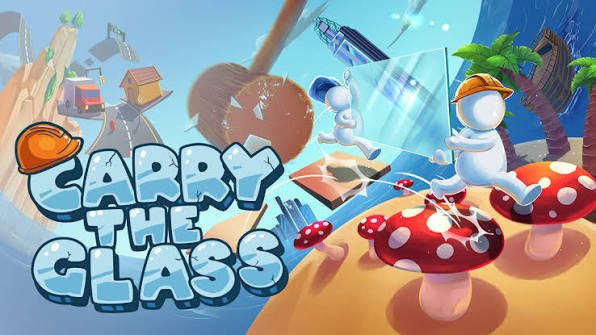
A broken pane gives a co-op mishap an unmistakable end. Its clarity is partly deceptive. The moment at which the glass fails is visible, while the decision that made failure likely might sit several seconds earlier. In the imagined street turn, a pane can end up pressed into a corner because the leading worker committed to the new direction before the rear end had enough room. From the rear player's view, the final movement might look like the decisive error. From the front player's view, that movement might have been an attempt to recover from an angle the pair had already developed together. The last person to move and the first person whose assumption proved wrong can be different people. Players may also be unable to identify either with confidence. The break supplies a result with an exact moment, then leaves the partners to work backward through a chain of inputs and reactions that they experienced from different places.
The structure of a retry affects how easy that reconstruction feels. On a short return to the same area, a partner can recognize the place where the sequence started to go wrong and compare it with a second attempt while the first is fresh. On a much longer return, the mishap may survive chiefly as a line of dialogue, an image of the pane at the wrong angle, or a remembered disagreement over when to move. This difference can shape the tone of a session. A quick failure encourages an immediate practical conversation about an identifiable moment. A distant failure leaves more room for a story about who did what. Either version can become affectionate or irritating depending on how the pair interprets the event. The fragility of the glass gives those interpretations weight. There is a shared consequence to explain, and two people who can describe it truthfully while disagreeing about what they saw before it happened.
9. Checkpoints Change the Cost of Trust
From a single obstacle to a continuous run
The official difficulty breakdown gives Normal plentiful checkpoints, Hard fewer, and Impossible none. For a game about carrying one object with two people, that difference changes the scope of cooperation. With a nearby checkpoint, the question after a break may be whether the pair can reproduce the last few seconds with one adjustment. The earlier part of the delivery can sit in the background as an accomplishment they have already banked. With no checkpoints, the same break sits inside the history of a continuous attempt. Getting back to the site of a mistake requires repeating stretches where the pair may already have felt confident. The design gives those familiar stretches a new role. They become part of the price of finding out whether the partners understood a later failure. A street turn that seemed trivial on the way in can feel different when it must be repeated after losing an otherwise promising climb.
Hard and Impossible therefore make a player's confidence in their partner matter over a longer interval. That confidence includes ordinary expectations about pace and attention as well as faith that a spectacular obstacle can be cleared. Can a pair repeat a turn cleanly after the novelty has worn off? Do both players treat a familiar stretch as settled at the same point, or does one start looking ahead sooner? Repetition brings such questions to the foreground because the two partners may be carrying different memories of the same obstacle. One remembers the clean run. The other remembers a close call inside it and still feels uneasy. Greater stakes can magnify the difference, since a small pause costs little time on paper but can feel expensive on the fourth approach to a late section. The difficulty settings give the same basic relationship different rhythms, from frequent opportunities to test a local idea to a long performance in which routine movements carry the accumulated effort of the run.
10. At the Top, the Window Records What the Pair Did Together
Conclusion
The Skyscraper course sends the workers to the top of the building, bringing the delivery back to the uncomplicated promise it began with. The window has a destination. By the time the pair reaches it, the pane also carries a history of every place where their decisions had to meet. The street corner showed how easily one person can mistake their own progress for the progress of the whole group. The climb made the interval between two arrivals visible. The hammer gave that interval a deadline, and the spinning floor made it harder to tell whose movement was doing what. Every time the workers brought the window clear, they had to produce a passage that made sense from both ends. They could come away with different memories of the moment and still have built something coherent together. The finished delivery gives all of those temporary agreements a concrete outcome. The same pane that exposed each mismatch is the thing they get to see reach the destination.
What makes that outcome distinctive is how ordinary many of its decisive moments look. One worker keeps a steady pace for a little longer. The other waits while a trailing edge clears. A correction that would be harmless on its own is held back because the partner is already making one. These moments lack the spectacle of a cannon throwing a car across a building, but they are where the game earns the feeling that the delivery belongs equally to both people. The players spend the route attending to the part of the movement they can control and learning to recognize the part they can only influence. At the destination, it is easy to picture the window in place and forget the strange geometry of bringing it there. The game lingers on the two people at either end, still attached to the same fragile object, finding out from its movement whether they meant the same thing when they said they were ready.